If you plan to sell in the next few years, or you simply want to spend wisely on a long-term home, the renovations that add the most value are rarely the most exciting ones. In the Los Angeles market, return usually comes from three things: fixing what buyers and inspectors flag, bringing the kitchen and primary bath up to the level of your comps, and adding usable, permitted space. Everything else is a judgment call.
Flip It Homes has spent more than ten years remodeling and building across the San Fernando Valley and the Westside, including pre-sale work for owners, agents, and investors. This guide ranks the most common projects by what they tend to return here. It explains how an appraiser and a buyer each see a project, and it names the upgrades that rarely come back at closing.
How We Rank the Renovations That Add the Most Value
Two different people decide what your renovation was worth. The appraiser works for the lender and relies on recent sold comparables, permitted living area, bedroom and bath count, and a condition and quality rating. The buyer walks through on a Sunday, looks at listing photos first, and decides whether the house feels done or feels like a project.
A project returns well when it moves both people. A new roof barely registers with buyers, but it keeps the inspection report clean and protects the appraisal. A beautiful kitchen moves buyers strongly, but an appraiser can only reward it as far as nearby sales support. The rankings below reflect what we see in typical Los Angeles-area sales, and they shift by neighborhood and price band.
- Most reliable return: deferred systems, permit cleanup, paint, and curb appeal
- Strong return when matched to comps: kitchen and primary bath updates
- Strong return over a longer hold: permitted ADUs and added bedrooms or baths
- Weak return: pools, single-purpose luxury rooms, and highly personal design
Fix Systems and Permits First, Even Though Nobody Photographs Them
On Valley homes built in the 1950s and 60s, we regularly find original galvanized supply lines, cast iron drains near the end of their life, undersized electrical panels, and tired roofs. Buyers rarely pay extra because these are right, but they discount heavily when they are wrong. An inspection report that lists a failing sewer line or an outdated panel turns into a repair credit request, and sometimes a canceled escrow.
Permits matter just as much. Unpermitted additions and garage conversions often cannot be counted as living area by an appraiser, and they make some buyers and lenders nervous. Clearing open permits with LADBS, or with the city's building department in places like Burbank or Santa Monica, before you list helps protect the price you negotiated.
- Roof age and condition, including flashing and gutters
- Electrical panel capacity and any remaining ungrounded wiring
- Water supply lines, sewer lateral, and water heater
- HVAC age, ductwork, and any Title 24 energy requirements a replacement triggers
- Open or expired permits and unpermitted additions
Order a sewer line camera inspection and a general home inspection before you plan any finishes. That small spend tells you whether your budget belongs underground or in the kitchen.
Kitchens: The Room That Sets the Price
The kitchen is the room buyers use to judge the whole house, and it is usually the lead photo in a listing. In our projects, the kitchens that return best are updated to the standard of recently sold homes nearby, not pushed far beyond it.
Typical Los Angeles-area kitchen remodels run roughly $50,000 to $150,000 or more depending on layout changes, cabinetry, and appliances, and our kitchen remodel cost breakdown walks through each tier. For resale, the sweet spot is usually a mid-range scope: new or refaced cabinets, quartz counters, a simple tile backsplash, good lighting, and a reliable appliance package.
- Keep the existing layout when it works, since moving plumbing and gas lines adds cost buyers never see
- Choose neutral cabinet colors and durable quartz over trend-driven finishes
- Add recessed and under-cabinet lighting, which photographs well and costs relatively little
- Match the appliance level to the neighborhood, since a pro range rarely pays back in a mid-priced tract home
Appraisers credit a renovated kitchen through the condition and quality rating, but only up to what nearby renovated sales support. That gap is where overspending hides. If you are planning a full kitchen remodel, price the finish level against your comps before you pick a single cabinet door.
Primary Bathrooms: Strong Return When the Scope Stays Disciplined
A dated primary bath is the second thing buyers mentally budget to fix. Replacing it with a clean walk-in shower, a double vanity where space allows, and proper ventilation removes that objection. Typical Los Angeles-area primary bath remodels run roughly $25,000 to $75,000 depending on size and finish level, and our bathroom remodel cost guide breaks down what each tier includes.
Where owners lose money is in steam showers, heated floors, and custom stone that buyers admire but rarely pay for. Waterproofing, correct slope, and a solid shower pan matter more, because an inspector who finds moisture behind tile will flag it. If the home has only one bathroom, adding a second often outperforms upgrading the first, since bath count shows up directly in appraisals and in buyers' search filters.
ADUs: Value Built on Rent and Flexibility
An ADU is the one project on this list that can pay you back before you sell. California state law sets minimum ADU allowances on most residential lots, with 4-foot side and rear setbacks for most detached units and a 60-day application review. That framework has made ADUs one of the most common projects we build in the Valley.
The appraisal story is more complicated. Appraisers need comparable sales with ADUs, and in some neighborhoods those are still scarce, so the unit may not receive full credit for its construction cost. Buyers, on the other hand, increasingly value a permitted unit for rental income, multigenerational living, or a home office. Our ADU rental income guide shows how to estimate rent before you commit.
- Garage conversions usually cost less because they reuse an existing slab and structure
- Detached ground-up ADUs cost more but can deliver a full bedroom and bath unit
- Both tend to pay back best over a hold of several years rather than a quick sale
If you are weighing options, start with our ADU and garage conversion services to see which approach fits your lot.
Curb Appeal and Paint: Among the Best ROI Home Improvements
Exterior paint, a new garage door, updated house numbers and lighting, a repaired driveway, and drought-tolerant landscaping cost a fraction of an interior remodel. They also change the first impression in every listing photo. Neutral interior paint and refinished hardwood floors do the same job inside.
Appraisers give these items little direct credit, but buyers respond to them, and they support the condition rating and shorten time on market. For listings, this is usually the first scope we price, alongside small repairs from the inspection report.
- Exterior paint and trim repair
- Drought-tolerant front landscaping with irrigation on a timer
- New garage door and entry door hardware
- Interior paint and refinished or replaced flooring
Over-Improvements That Rarely Come Back at Sale
Some projects make sense to live with but should not be justified as investments. In the LA market, these are the ones we caution owners about most often when remodel resale value is the goal.
- In-ground pools, which add maintenance and insurance costs and can narrow the buyer pool
- Wine rooms, home theaters, and other single-purpose spaces
- Luxury finishes priced well above the neighborhood range
- Highly personal design, such as bold tile or custom built-ins buyers plan to remove
- Converting a bedroom into a closet or office, which lowers the bedroom count
The pattern is consistent. The appraiser has no comp that supports the cost, and the buyer either does not value it or would rather choose it themselves. If you love a pool, build it, and budget it as a lifestyle purchase rather than an investment.
Which Renovation First? A Sequence That Protects Your Budget
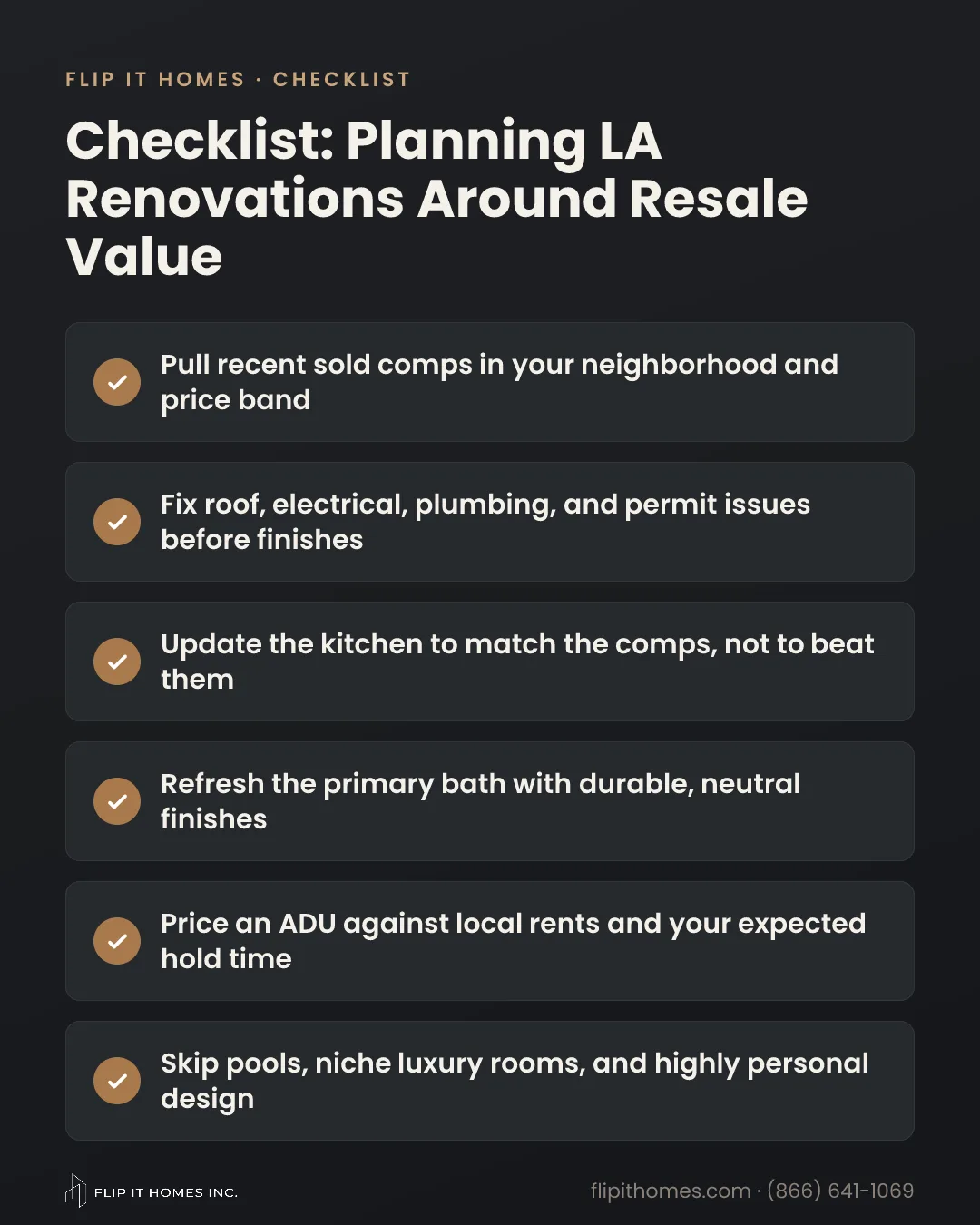
- Inspect the house and pull sold comps in your neighborhood and price band.
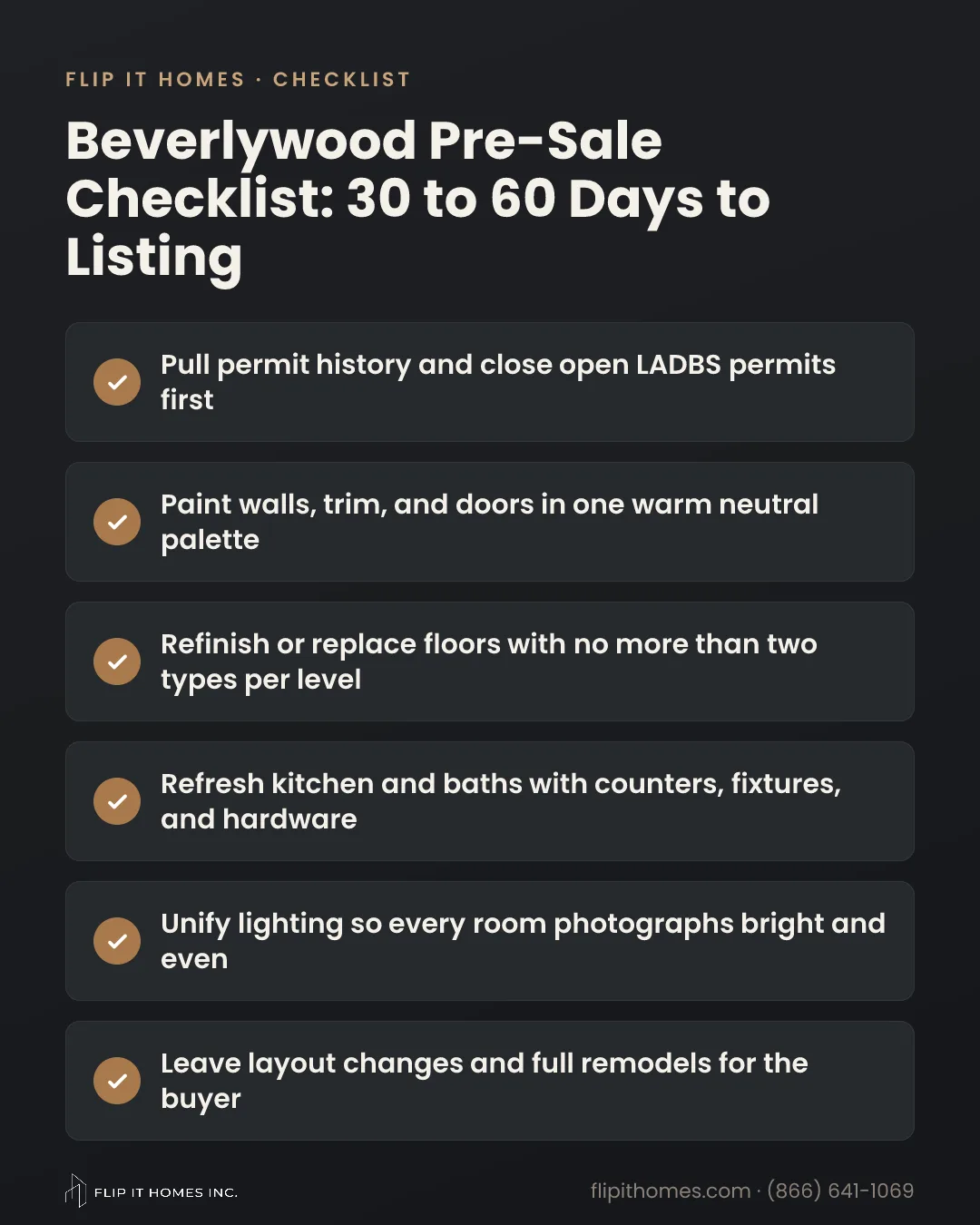
- Fix safety, systems, and permit issues that would appear in a buyer's inspection.
- Add bedrooms, baths, or an ADU if comps show that space is what your house lacks.
- Update the kitchen and primary bath to the level of the comps.
- Finish with paint, flooring, lighting, and curb appeal.
Ask your listing agent for the three most recent sold homes closest to yours before you finalize finishes. Choosing materials against real comps is the simplest way to avoid over-improving.
For investors and agents, our real estate development team prices this sequence before close of escrow so the scope matches the after-repair value. Homeowners planning a future sale can use the same logic in our house flip renovation budget guide. When you are ready, request a free on-site consultation and our family-run team will walk the house with you.
Find Out Which Upgrades Will Pay Off on Your Home
Schedule a free on-site consultation with our licensed, family-run team. Call (866) 641-1069 or request a quote online.
Request a Free Quote