A house flip renovation budget is only as good as the number you lock in before close of escrow. Most margin is lost before the first wall comes down. It goes to an optimistic scope, a finish level the neighborhood will not pay for, or a sewer line nobody camera-inspected.
In our investment projects across the San Fernando Valley and the Westside, the flips that hold their margin share one habit. Every line item is tied to what comparable homes actually sold for. This guide covers scope-to-comps discipline, the upgrades buyers pay for, walkthrough red flags, and the 10 to 15 percent contingency rule that keeps a surprise from becoming a loss.
Start With the Comps, Not the Wish List
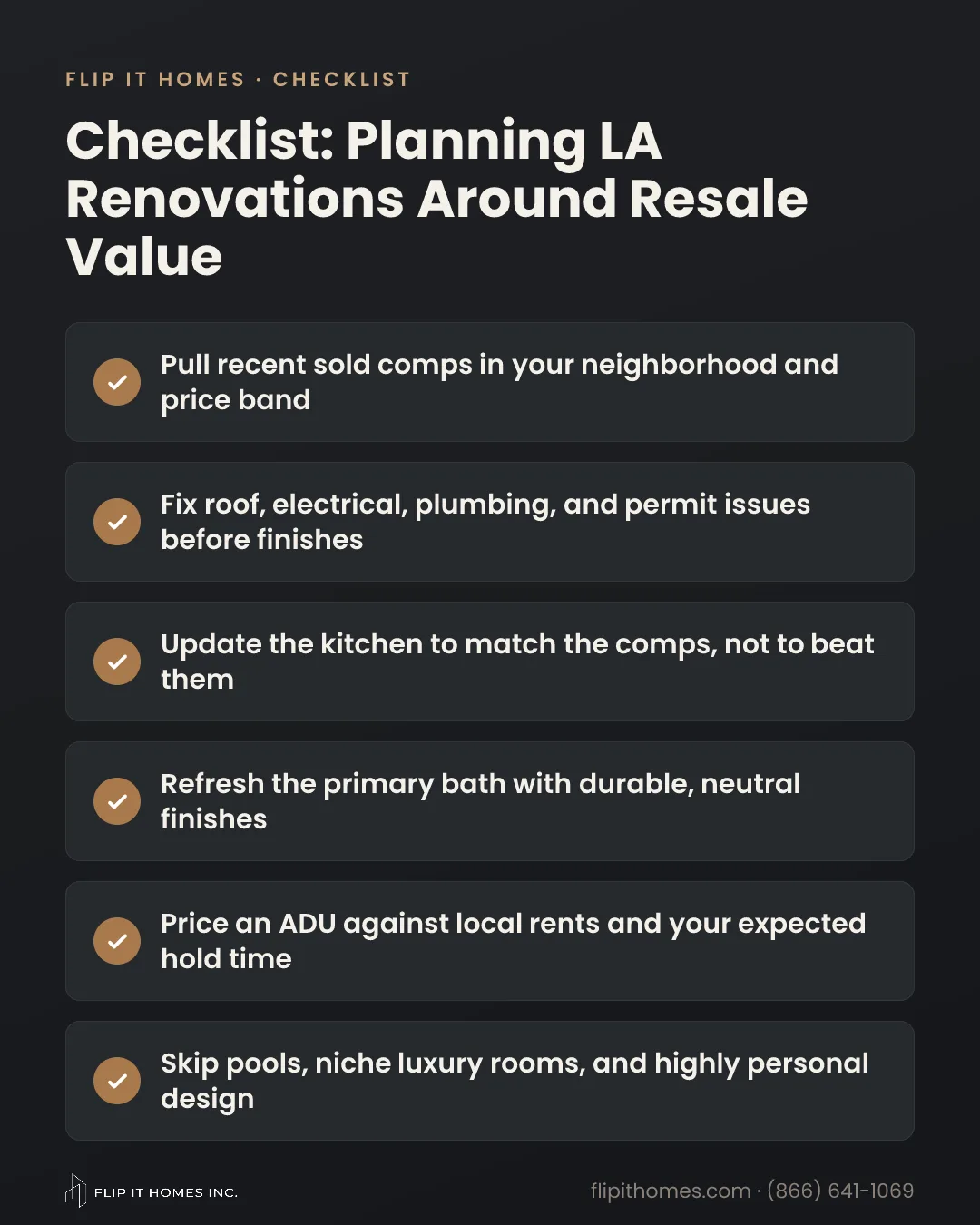
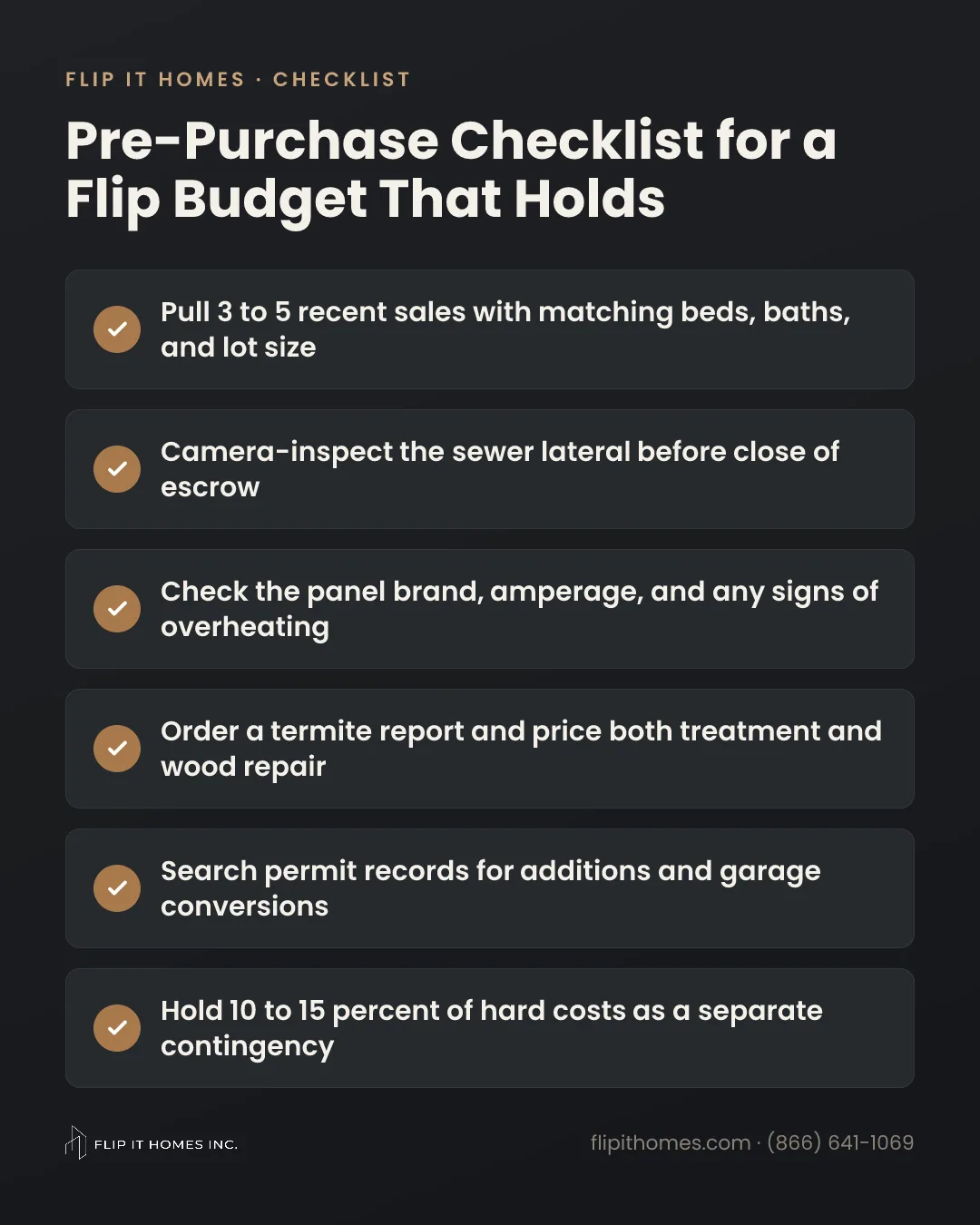
Before you price a single cabinet, define the finished product. Pull three to five sales from the last six months within roughly half a mile, matching bedroom and bathroom count, square footage within about 10 percent, and similar lot size. The top of that range is your ceiling, and your investor renovation scope should aim just under it.
Then study the comps closely. Note the countertop material, flooring, fixture finishes, and whether the kitchen opens to the living area. That becomes your spec sheet. A Van Nuys tract home and a Sherman Oaks home a few miles away can draw buyers with very different expectations, and building to the wrong spec costs you either margin or days on market.
Over-improving is the quiet margin killer. A $15,000 appliance package in a neighborhood where comps have mid-range stainless does not add $15,000 to the sale price. It mostly adds $15,000 to your cost.
What the Resale Market Actually Pays For
In our experience, buyers and appraisers reward a short list of improvements. Spend where the buyer looks and where the home inspector looks.
- Kitchen: new or refaced cabinets, quartz counters, tile backsplash, and an appliance package matched to the comps
- Primary bathroom: new vanity, tile, glass shower enclosure, and current fixtures
- Continuous flooring through living areas with no mismatched transitions
- Neutral interior and exterior paint
- Curb appeal: front door, house numbers, exterior lighting, and simple drought-tolerant landscaping
- Systems that pass inspection: roof, panel, plumbing, HVAC, and sewer
Budgets tend to leak in the same places:
- Custom cabinetry or designer tile above the comp range
- Pools and elaborate hardscape where comps lack them
- Whole-home automation and specialty lighting packages
- Moving plumbing walls when the existing layout already works
Adding a bathroom is the exception worth studying. If a 3-bed, 1-bath becomes a 3-bed, 2-bath and moves into a higher comp bracket, it can pay for itself, but it usually adds plan check and schedule. For cost context, see our guides on kitchen remodel costs in Los Angeles and bathroom remodel costs.
How to Structure a House Flip Renovation Budget
A flip budget is more than a construction estimate. Fix and flip costs in Los Angeles fall into six buckets, and leaving any of them off the spreadsheet inflates your projected profit.
- Hard costs: demolition, labor, materials, and finishes, itemized by room and trade
- Soft costs: design, engineering if needed, permits, plan check, and inspections
- Contingency: 10 to 15 percent of hard costs, held as its own line
- Carrying costs: loan interest, property taxes, insurance, and utilities for every month you own it
- Selling costs: commissions, transfer taxes, escrow, staging, and buyer credits
- Profit target: set first, then work backward to your maximum purchase price
Work backward from the realistic after-repair value. Subtract selling costs, carrying costs, renovation with contingency, and your profit target. What remains is your maximum offer, and if the seller wants more, the deal does not work at that scope.
As typical Los Angeles-area ranges that vary by scope and site, a cosmetic refresh of a 1,400-square-foot Valley ranch home often lands around $40,000 to $90,000, while a full renovation with kitchen, baths, and systems can run $150,000 to $300,000 or more. Our whole house remodel cost guide breaks those tiers down further.
Pre-Purchase Walkthrough Red Flags
You may get one short walkthrough before you commit. Use it to look for items that change the scope, not the paint colors. We see these repeatedly on Valley homes built in the 1950s and 60s.
- Sloping floors, sticking doors, and diagonal drywall cracks at window corners
- Soft spots in raised floors, which can point to subfloor rot or a weak cripple wall
- Galvanized supply lines, low water pressure, or rust-colored water
- Original electrical panels, two-prong outlets, or ungrounded wiring
- Small pellets on sills or in the attic, a common sign of drywood termites
- Garage conversions, patio enclosures, or added rooms that may lack permits
- Popcorn ceilings, old vinyl tile, or mastic that needs asbestos testing before demo
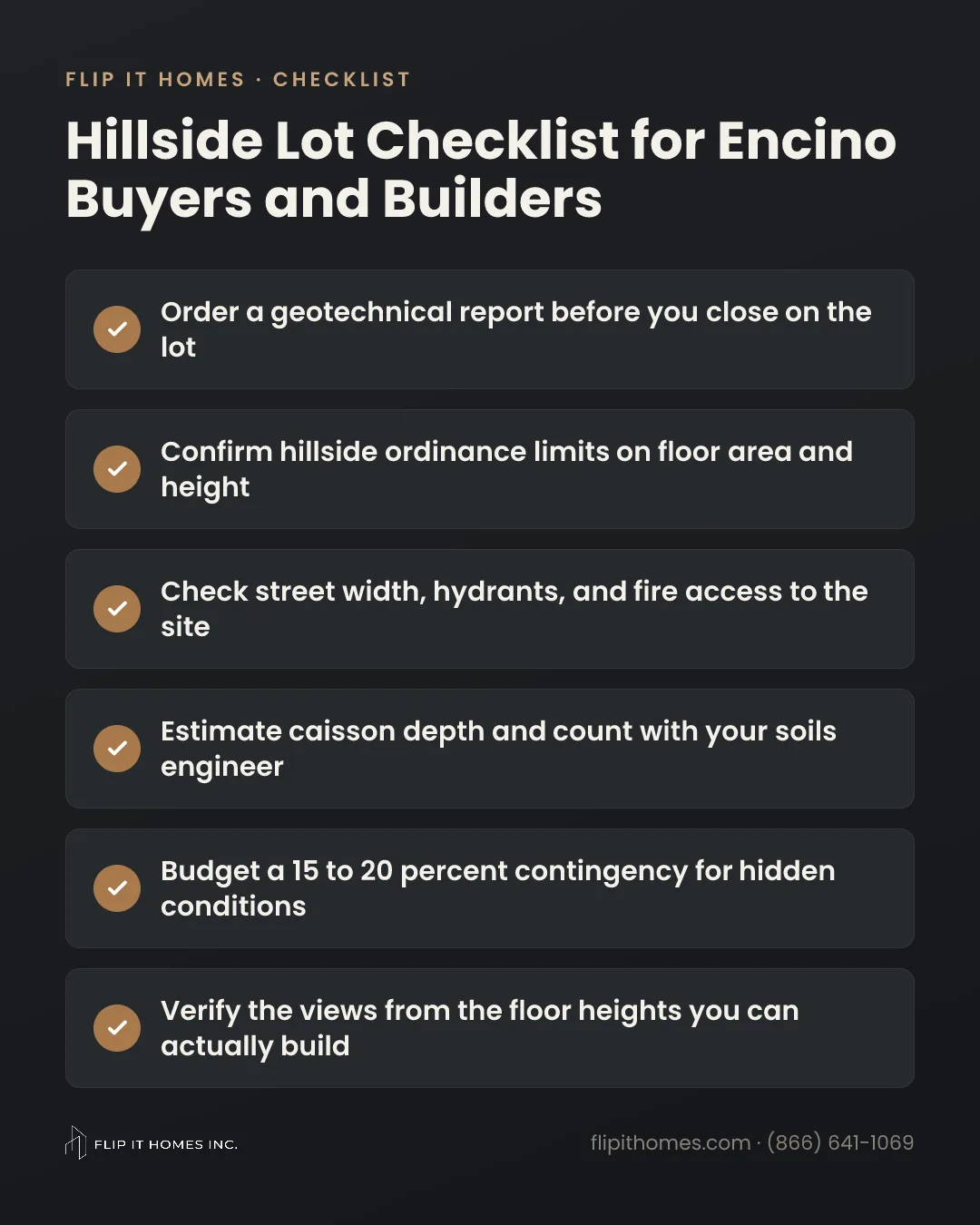
Unpermitted work can mean legalizing or removing it before sale. In the City of Los Angeles, check permit history with LADBS. In Burbank, Beverly Hills, Santa Monica, Culver City, Calabasas, or Agoura Hills, check with the city's building department, and Altadena goes through LA County. Ask your agent or a real estate attorney about disclosure obligations.
Bring your contractor to the walkthrough. Through our real estate development service, we price scope before you buy, so you underwrite with a real number instead of a guess.
Where Investor Budgets Blow Up: Sewer, Panel, and Termites
Three items account for a large share of the overruns we see on investor projects. All three are hidden on a walkthrough and all three can be checked before close.
Sewer lateral. Many older LA homes still have clay or cast iron lines to the street, and roots, offsets, and sagging sections are common. In typical Los Angeles-area ranges, a spot repair may run a few thousand dollars, while full replacement or lining can reach $10,000 to $30,000 or more depending on length, depth, and whether the street must be opened.
Electrical panel. Many mid-century Valley homes have 100-amp service or less, and some have panel brands that inspectors and insurers flag. A new kitchen plus air conditioning often forces a service upgrade, typically around $4,000 to $12,000 in the LA area, more if the utility requires relocating the meter. Utility scheduling can add weeks.
Termites. Drywood termites are common across Southern California, and visible damage is usually the small part. Treatment is one line. The real cost is replacing damaged fascia, rafter tails, sill plates, and subfloor, so price the repair section of the report, not just the fumigation.
The 10-15 Percent Flip Budget Contingency Rule
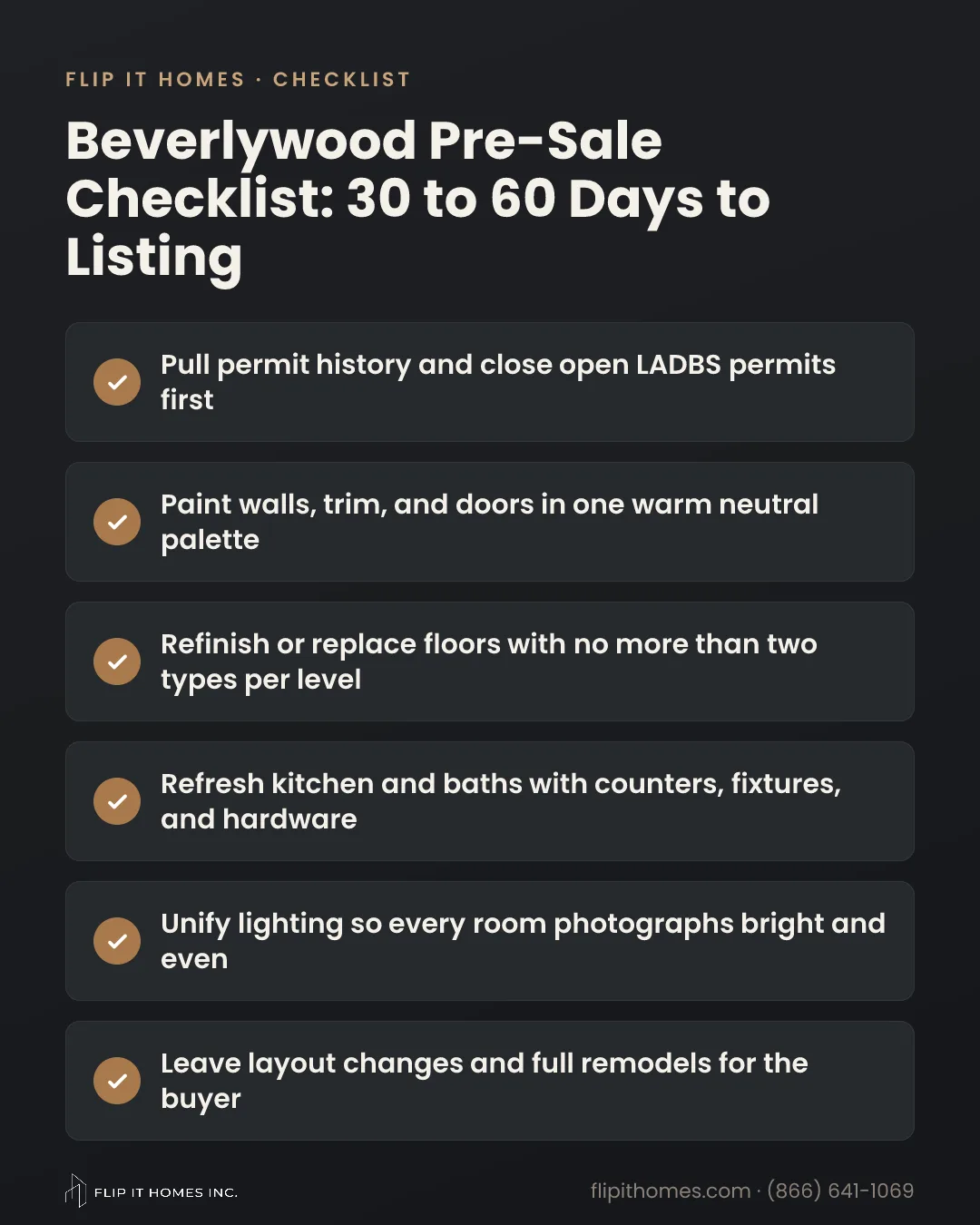
A flip budget contingency is not padding. It pays for what the walls hide. We recommend 10 percent on cosmetic flips with clean inspections and 15 percent on older homes or any project that opens walls.
- 10 percent: paint, flooring, fixtures, and a kitchen refresh with no layout change
- 15 percent: full kitchen and bath remodels, plumbing or electrical upgrades, homes built before 1970
- Above 15 percent: structural work, unpermitted additions to legalize, or known termite or foundation issues
Two rules keep contingency working. Calculate it on hard costs and keep it visible as its own line. And never spend it on upgrades. If the kitchen comes in under budget, that savings goes to profit, not to a fancier range hood.
If your deal only works with zero contingency, it does not work. Renegotiate the price or cut scope before you close.
Schedule Discipline Protects the Margin
Every week on site adds carrying costs. On a leveraged flip, interest, insurance, taxes, and utilities can reach thousands of dollars a month, so a six-week delay can erase a meaningful slice of profit.
Order long-lead items like windows and appliances before demolition. Decide finishes once, from your comp-based spec sheet, and do not revisit them on site. Cosmetic work often needs no permit, but service upgrades, layout changes, and new bathrooms typically do, and plan check timing varies by jurisdiction.
A builder who handles design, permits, and construction under one roof removes hand-off delays. Flip It Homes has run investment projects in Los Angeles since 2015 and holds a 4.9-star rating across 159 reviews. If you are evaluating a property now, request a quote and we can walk it with you before you commit.
Know your renovation number before close of escrow
Our team will walk the property with you, flag the sewer, panel, and termite risks, and price an itemized scope built to your comps. Call (866) 641-1069 for a free on-site consultation.
Request a Free Quote