A soft spot by the toilet, a hairline crack in the shower grout, a smell that never quite clears. Each one is easy to shrug off, and each one is among the most common signs of water damage in bathroom floors and walls that we open up on Los Angeles jobs. By the time paint bubbles or a ceiling stains, water has usually been moving for months.
This guide explains what each symptom actually means, which fixes are cosmetic and which are structural, and how to tell when patching has stopped making sense. It draws on what we have found behind the tile in more than 10 years of remodeling bathrooms across the San Fernando Valley and the Westside.
Why Bathroom Water Damage Stays Hidden So Long
Tile and grout are not waterproof. Cement grout is porous, and some water passes through it every time you shower. What keeps the house dry is the layer behind the tile: a waterproofing membrane, a sloped mortar bed, and a pan liner that sends water to the drain.
On Valley homes built in the 1950s and 60s, we often find original mortar-bed showers with tar paper behind the walls and liners that have cracked or corroded after decades. On 1980s and 90s remodels, the usual culprit is drywall or greenboard behind tile with no membrane at all. Either way, the surface can look fine while the wood behind it rots.
The Signs of Water Damage in Bathroom Floors and Walls, Decoded
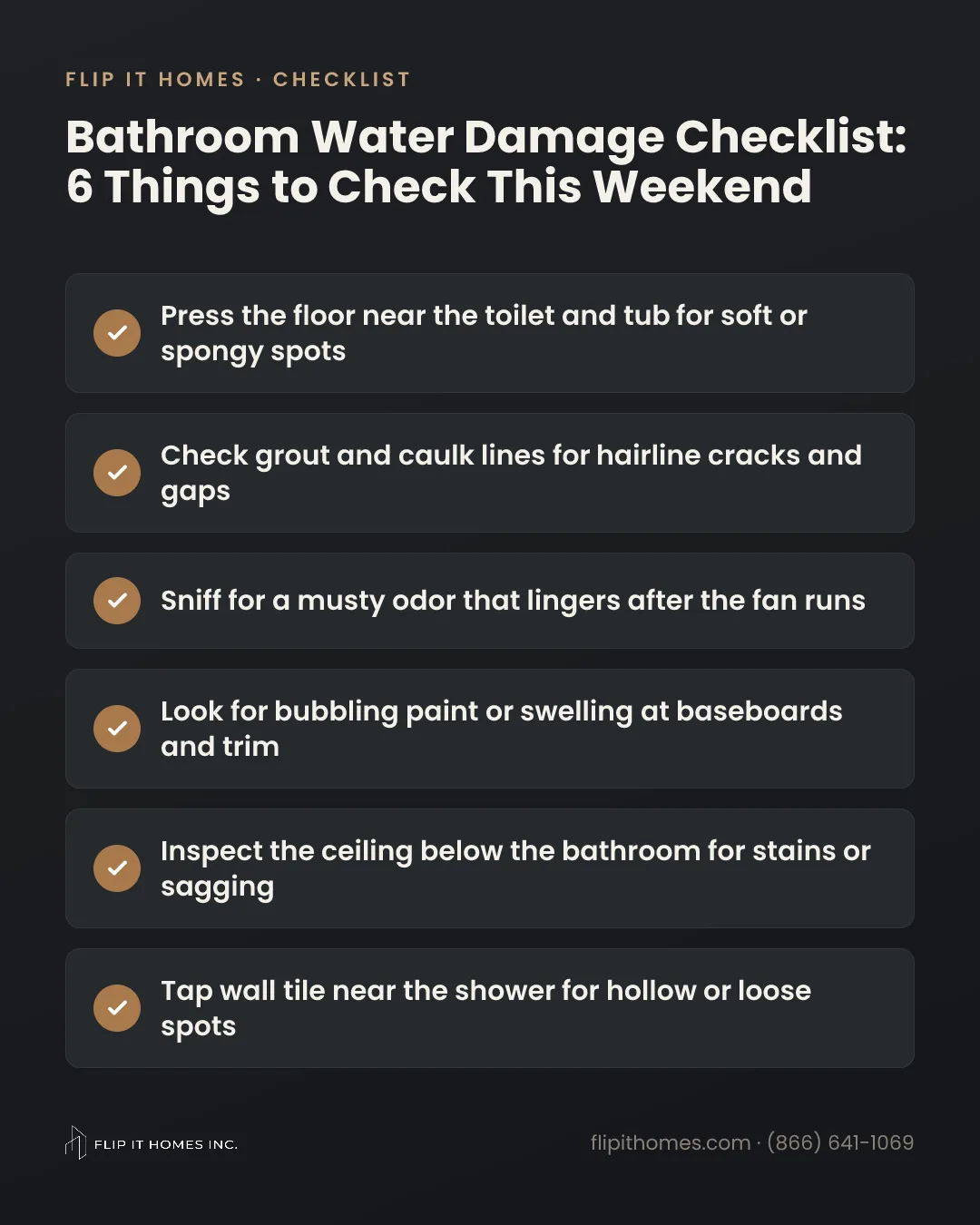
Here is what the most common symptoms usually point to. One sign alone may be minor. Two or three together almost always mean water is reaching somewhere it should not.
- Soft or spongy floor near the toilet or tub: the subfloor is likely saturated or delaminating. At a toilet this often traces to a failed wax ring or loose flange; next to a tub, to a failed caulk joint or leaking drain.
- Hairline grout cracks that keep returning: especially along corners or the bottom row of tile, this often means the backing behind is moving because it is wet or soft.
- Musty smell that survives cleaning: mold or mildew growing inside the wall cavity, under the floor, or under the vanity.
- Bubbling or peeling paint: moisture pushing out from inside the wall, not just shower steam. Check the wall on the other side of the shower too.
- Loose or hollow-sounding tile: the bond has failed, often because the backer board or mortar bed has softened.
- Swollen baseboards or a stained ceiling below: water has already traveled. In two-story homes in Encino and Sherman Oaks, a ceiling stain under the upstairs bath is often the first thing anyone notices.
Take a dated photo of any stain, crack, or bubble and recheck it in two weeks. New spots or growth tell you the leak is active, which is useful for your contractor and for any insurance conversation.
Bathroom Mold Warning Signs and What to Do About Them
Surface mildew on grout or caulk is common in any bathroom with weak airflow, and it is usually a ventilation problem rather than a leak. The mold that matters grows inside the wall or floor, and it shows itself in quieter ways.
- A musty odor strongest when you first open the door or vanity cabinet
- Gray or black spotting at the base of walls, behind the toilet, or along the ceiling line
- Spots that return within days of cleaning
- Allergy or breathing symptoms that ease when you are away from home
Small surface patches can be cleaned and the cause corrected. If mold keeps returning, covers more than a small area, or seems to be inside the wall, have it assessed by a mold professional before demolition. On our remodels, affected framing is removed or treated per that assessment, and the wall stays open until it is dry.
How to Tell If You Have a Shower Pan Leak
A shower pan leak is one of the costliest bathroom problems because the pan sits under the floor tile, out of sight. Watch for damp or soft drywall outside the curb, swollen baseboard on an adjoining wall, a stain on the ceiling below, or floor grout that stays dark long after you shower.
You can narrow down the source with a simple sequence before calling anyone:
- Inspect caulk at the curb, inside corners, and door jamb for gaps where water can slip past the tile.
- Spray only the walls for 10 minutes with the drain open, then check outside the shower and below for new moisture.
- Run the valve with the showerhead aimed away from the walls to rule out a leak at the valve or shower arm.
- If those tests stay dry, ask a contractor or plumber to run a flood test, which holds water on the plugged pan to see whether the liner holds.
Leave the flood test to a pro, since a failed pan can push water into the room below during the test. If the pan fails, regrouting will not help. The floor tile and mortar bed have to come out so the liner can be replaced.
Cosmetic vs Structural: Which Fixes Actually Fix It
Many bathroom repairs treat the symptom. That is fine when the problem really is on the surface and costly when it is not.
Usually cosmetic, appropriate when the backing is solid and dry:
- Regrouting or recaulking joints cracked from age or shrinkage
- Sealing cement grout to slow water absorption
- Repainting with moisture-resistant paint after fixing ventilation
- Replacing a toilet wax ring before the subfloor softens
Structural, required once water reaches the framing:
- Replacing rotted subfloor or joists under a toilet or tub
- Rebuilding the shower pan, mortar bed, and liner
- Removing drywall behind tile and installing backer board with a membrane
- Replacing corroded galvanized supply lines or cast-iron drains
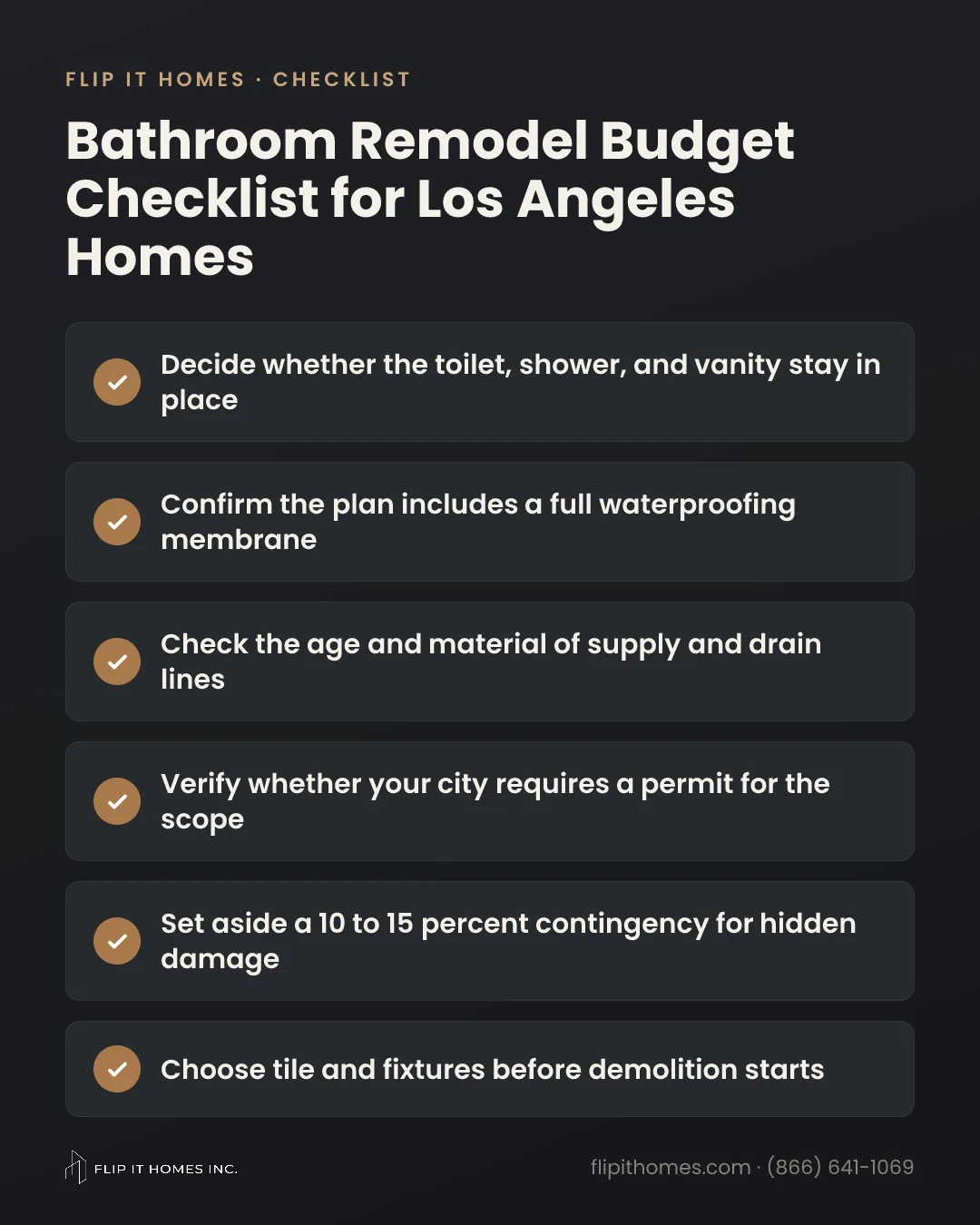
As typical Los Angeles-area ranges that vary by scope and site, regrouting and recaulking a shower often runs a few hundred dollars to around $1,500, while rebuilding a shower down to the studs commonly runs $8,000 to $20,000 or more. Neither figure is a quote. Our bathroom remodel cost guide breaks down full remodel tiers.
Be wary of any repair that seals or caulks over cracks on a floor that already feels soft. It can trap water in the subfloor and make the eventual repair larger.
When to Remodel a Bathroom Instead of Patching It
Patching makes sense when damage is limited and the rest of the room is sound. Deciding when to remodel a bathroom comes down to a few honest questions.
- Has the same spot been repaired before and failed again?
- Is the floor soft in more than one place, or does it flex near the tub?
- Is the shower original to a 1950s through 1970s house?
- Are supply lines galvanized, with low pressure or rust-tinted water?
- Is there no exhaust fan, or one that vents into the attic instead of outdoors?
- Would fixing the leak already require removing most of the tile?
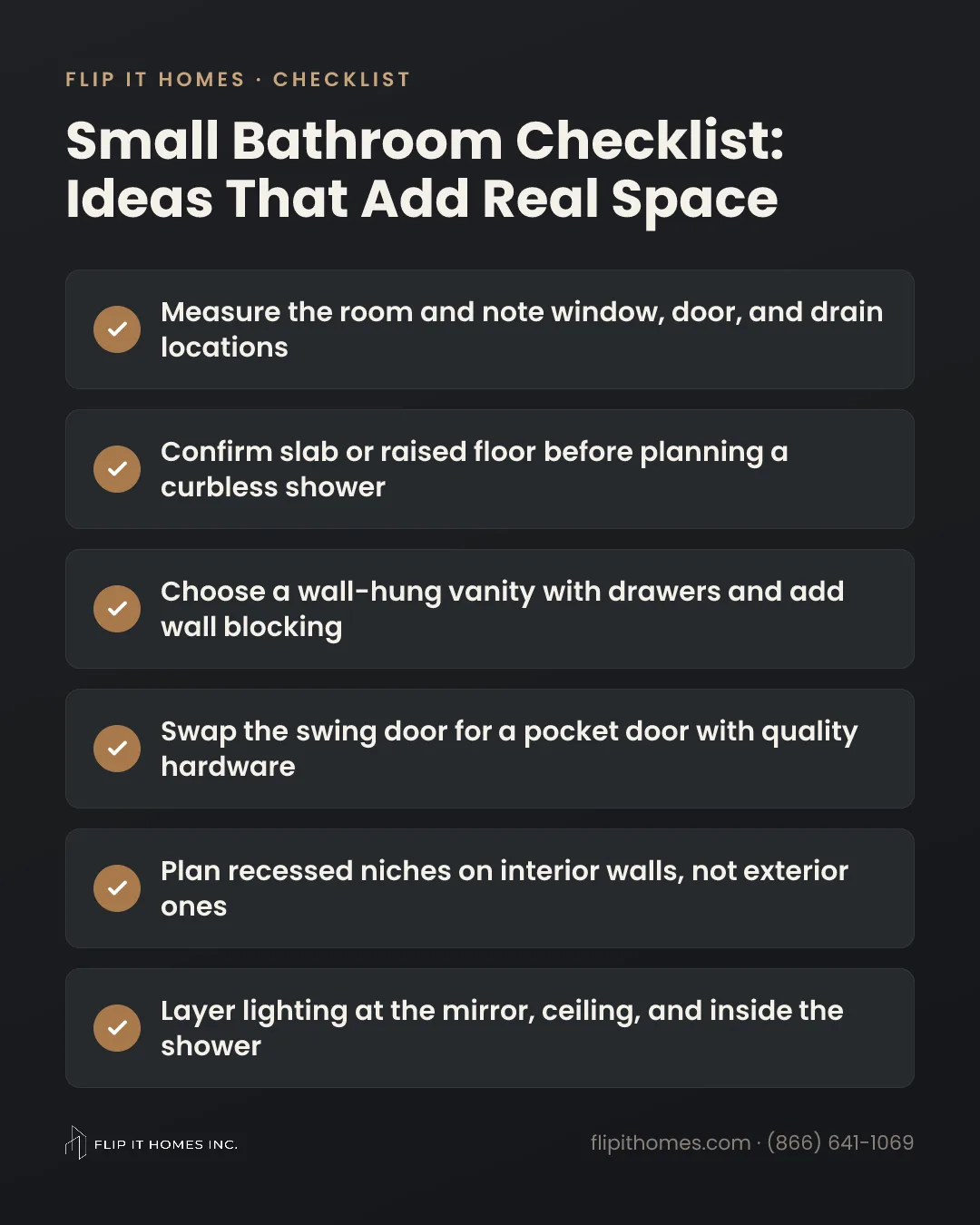
If you answered yes to two or more, a targeted remodel usually costs less over the next decade than repeated repairs. Once the tile is coming off, new finishes or a better layout add modestly to demolition and waterproofing you are already paying for. Our small bathroom remodel ideas can help you plan layout changes at the same time.
How a Proper Bathroom Remodel Stops the Water Damage Cycle
A remodel only breaks the cycle if the hidden layers are rebuilt correctly. Here is the sequence we follow on our bathroom remodeling projects:
- Demolish to studs and subfloor in the affected area, with dust containment and floor protection elsewhere.
- Document and repair damaged framing and subfloor, then let the assembly dry.
- Replace galvanized or corroded supply and drain lines while walls are open.
- Build a properly sloped shower pan so water reaches the drain instead of pooling.
- Install a continuous waterproofing membrane and flood test the pan before tile goes down.
- Add a ducted exhaust fan vented outdoors, ideally with a humidity sensor.
- Pass inspections, then set tile, fixtures, and finishes.
Permits matter here. In the City of Los Angeles, plumbing, electrical, and framing work typically goes through LADBS permits and inspections; in Burbank, Santa Monica, or Calabasas, the city's building department handles it. If you are seeing two or more of these signs, request a free on-site consultation and we will tell you whether you need a repair or a remodel. You can also read what neighbors say in our client reviews, where we hold 4.9 out of 5 stars across 159 reviews.
Not Sure If That Soft Spot Is Serious?
We will inspect your bathroom during a free on-site consultation and tell you honestly whether it needs a repair or a remodel. Call (866) 641-1069 or request a quote online.
Request a Free Quote